
 Historic Medley District
HMD SPEAKER SERIES–Historic Ag Reserve Properties by Kenny Sholes
Old Town Hall, Sunday, March 10, 2019.
“Historic Homes of the Agricultural Reserve” (from The Monocacy Monocle, by Maureen O’Connell).
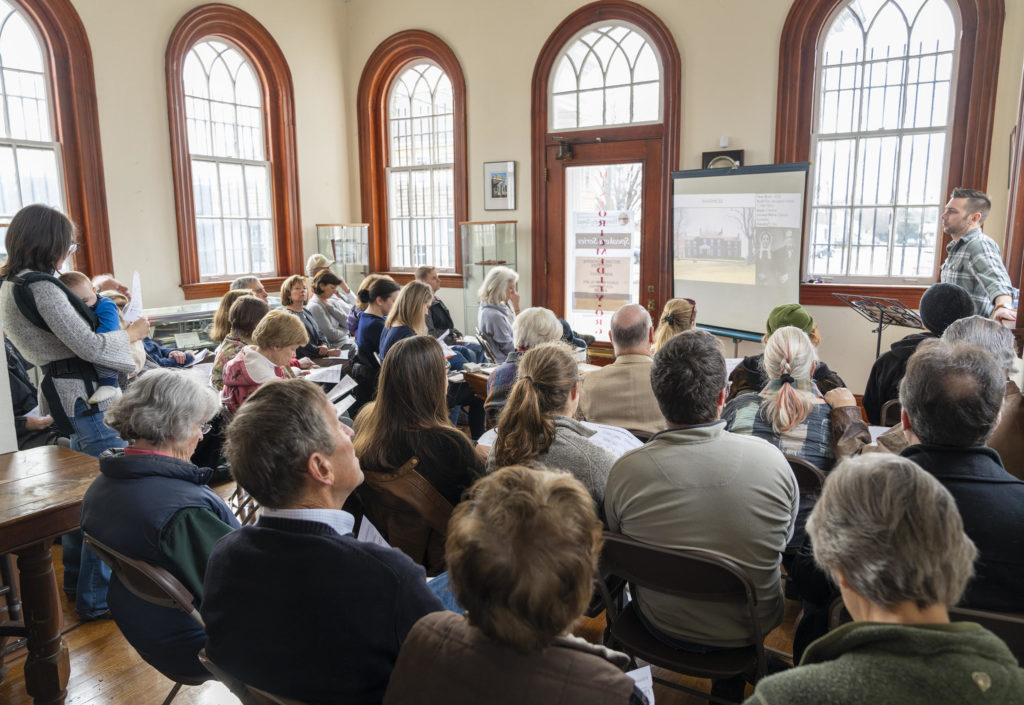
On Sunday, March 10, the Historic Medley District, Inc. hosted the second event in their Speakers Series with featured speaker Kenny Sholes at the Old Town Hall Bank Museum in Poolesville, Maryland.
With a slide show of text and pictures, he brought to life eight historic manor homes in Montgomery County’s Agricultural Reserve for the fifty people in the audience. He grew up in Poolesville and currently he, his wife and two children and his parents reside in town.
Sholes began his presentation by saying that recently his son Sawyer asked him “Why do you like old houses?” He replied that as a youngster, while driving through Poolesville many times with his family, he was fascinated by the many fine, old brick homes on large tracts of farm land he passed every day. When he grew older, he went off to college and the army. When he came back to Poolesville to live and raise his family, he noticed that the manor homes he admired as a child were still there and the streets in many of the new housing developments all around town, were named after the area’s old families: Chiswell, Wootton, and White. But, the stories about these people, the homes they built and lived in and the land they farmed were becoming a fading legacy, a fading memory. Many of the new town residents had little recollection or interest in the men and women who years ago raised their children in the area, supplied food for the community, and fought and died in the Civil War. Sholes wanted to enkindle in the adults and children of Poolesville and the surrounding towns an interest and appreciation of the historicity of what many of us often take for granted or forget. The legacy of Poolesville lives in the long list of old family names and the manor homes in which they lived, the wars they saw and died in, love of family and perseverance, civil service, and slavery. Sholes reminded the audience: “We should strive to understand the past, despite all the new technological innovations of today.” In the eighteenth and nineteenth centuries, people communicated without cell phones, tablets, and Apple Macs.
Children could attend school and learn spelling, grammar, mathematics, and history without being attached to their iPhone.
Sholes’ slide show presentation highlighted many homes in the Poolesville area of the 1700’s and the 1800’s. The lock houses of the Chesapeake and Ohio Canal were an integral part of the era of canal transportation, sheltering the lockkeeper and his family. His children probably attended the one-room Seneca Schoolhouse on River Road. Poolesville was a very different place than it is today. Agriculture was the main supporting activity. The large plantations and their homes were expensive and were owned by wealthy, white farmers who grew tobacco. The early settlers came to the area from southern Maryland, bringing with them their slaves and southern way of life. In the 1860’s, nearly a third of Montgomery County’s population was composed of slaves. As Maryland did not secede from the Union, the state was not included in the Emancipation Proclamation of January 1, 1863, which declared that all slaves within the Confederacy (but not those in border states like Maryland) would henceforth be free. Maryland voted to abolish slavery in 1864. The majority of the population living north and west of Baltimore held loyalties to the Union, but most of the citizens living on large tracts of land in the southern and western areas of the state were sympathetic to the Confederacy. Many young men crossed the Potomac to join the Confederate Army. The Battle of Ball’s Bluff and General Jubal Early’s unsuccessful attempt to take Washington, D.C. were launched from Montgomery County.
The historic manor homes that Sholes spoke about are all near Poolesville. Intermarriage was common during this time of history. Over generations, the blood lines of many of the families intertwined and the same middle and last names appear in ownership of many of the homes. Today, some are inhabited and some are abandoned or cared for by the County. Chiswell’s Inheritance was built in 1796 by Joseph Newton Chiswell and he lived there with his wife Eleanor Smith White Chiswell and their children. MaryAnn Kephart, the founder of Historic Medley District, lived there from 1956 to her death in 2009. Inverness on Route 28 in Beallsville was built in 1818 by Benjamin White. The fine red brick home on White’s Ferry Road, East Oaks, was built by Henry Claude Young in 1829. The large farm was well known for its innovative new farming techniques. Chiswell Farm was built during the time frame of 1830 to 1880 by Edward Jones Chiswell. He was a Southern sympathizer and was very active in the community. On the road to White’s Ferry, you can still see on the right side of the road the plantation farm Annington, built in 1813 for Stephen Newton Chiswell White and his wife Ann Belt Trundle White. At this time, farming was making a transition from tobacco to wheat. There are many interesting stories of this house and its residents. Some say that the ghost of Stephen White still lurks in the shadows of the home’s many rooms. During the Civil War, Union soldiers used the house as a lookout point across the nearby Potomac River. Rocklands on Montevideo Road was built in 1870 by Benoni Allnutt. It still stands today and the land is operated as Rocklands Farm Winery. The Joseph C. White House was built in 1824. This federal style house is not inhabited today and is owned by the county. The last historic home that Sholes spoke about was Stoney Castle. By the turn of the century, the tract on which the home is situated was part of the large land-holdings of George Peter of Georgetown, D.C. In 1831, Stephen Newton White purchased 705 1/16 acres of this land and brought his young family to live there. Their second son Elijah Viers White became a prominent military commander of the Company B of the 35th Virginia Calvary. /—/
After the war, many of the Confederate veterans returned to their farms, but the land and many farm buildings were heavily damaged by scavenging Union and Confederate soldiers. Some entered politics and served in the state legislature. The many who died in the war were buried in the Monocacy Cemetery in Beallsville.
In closing, Sholes asked us “not to forget.” Across Montgomery County, many historic homes have been bulldozed to make way for homes and shopping centers. When we lose these important landmarks, we lose many cultural resources and much of our history. We owe a dept of gratitude to Royce Hanson, the leading voice for the creation of Montgomery County’s Agricultural Reserve. We must treasure and preserve this land, or we lose it.
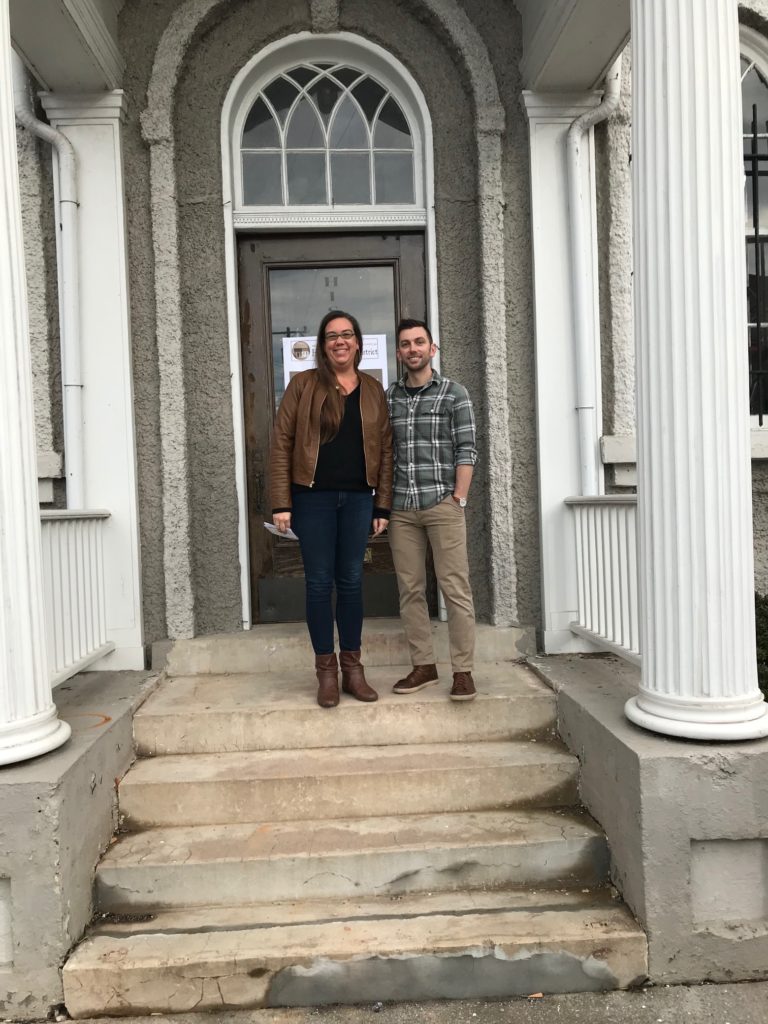
Town Councilperson Kerri Cook and Kenny Sholes 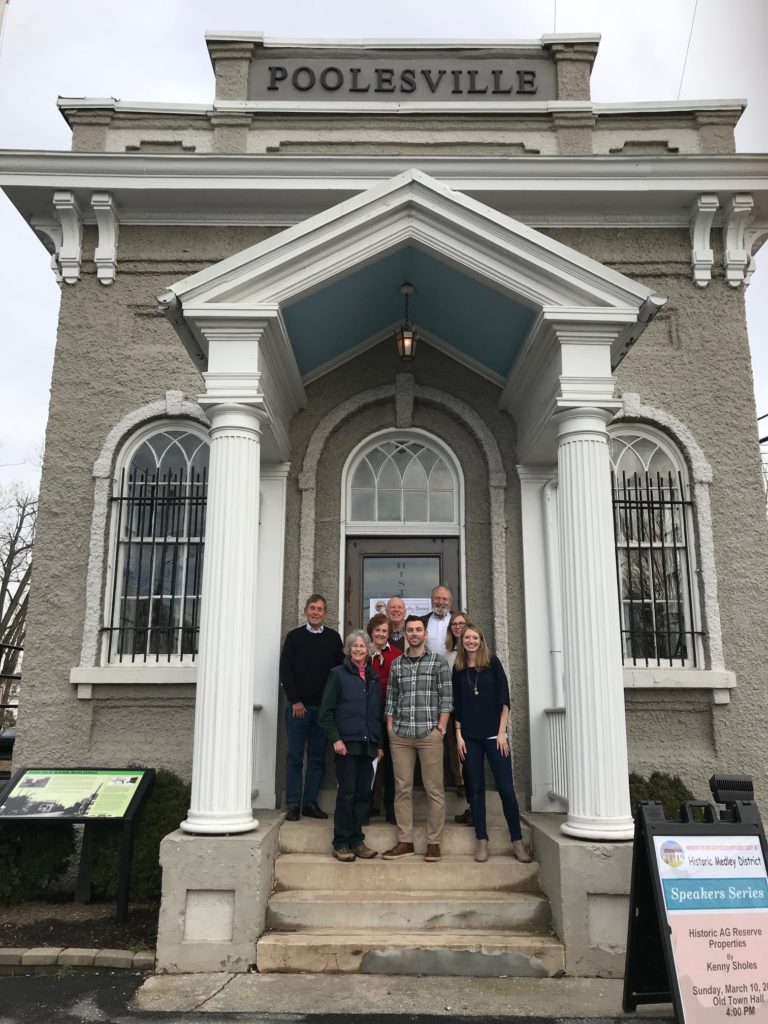
Kenny Sholes in center with appreciative
attending HMD Board members (L to R) Chet Anderson, Jean Findley (Treasurer), Maureen O’Connell (President), Knight Kiplinger (Chairman), John Pentecost, Abby Clouse and Amy Baker
Kenny Sholes was gracious to share his power point presentation.
To view presentation details, please click link below:
https://www.historicmedley.org/wp-content/uploads/2019/03/HMD-Sholes-Presentation-Final.pdf